
Genetics
Closing the Welfare Gap
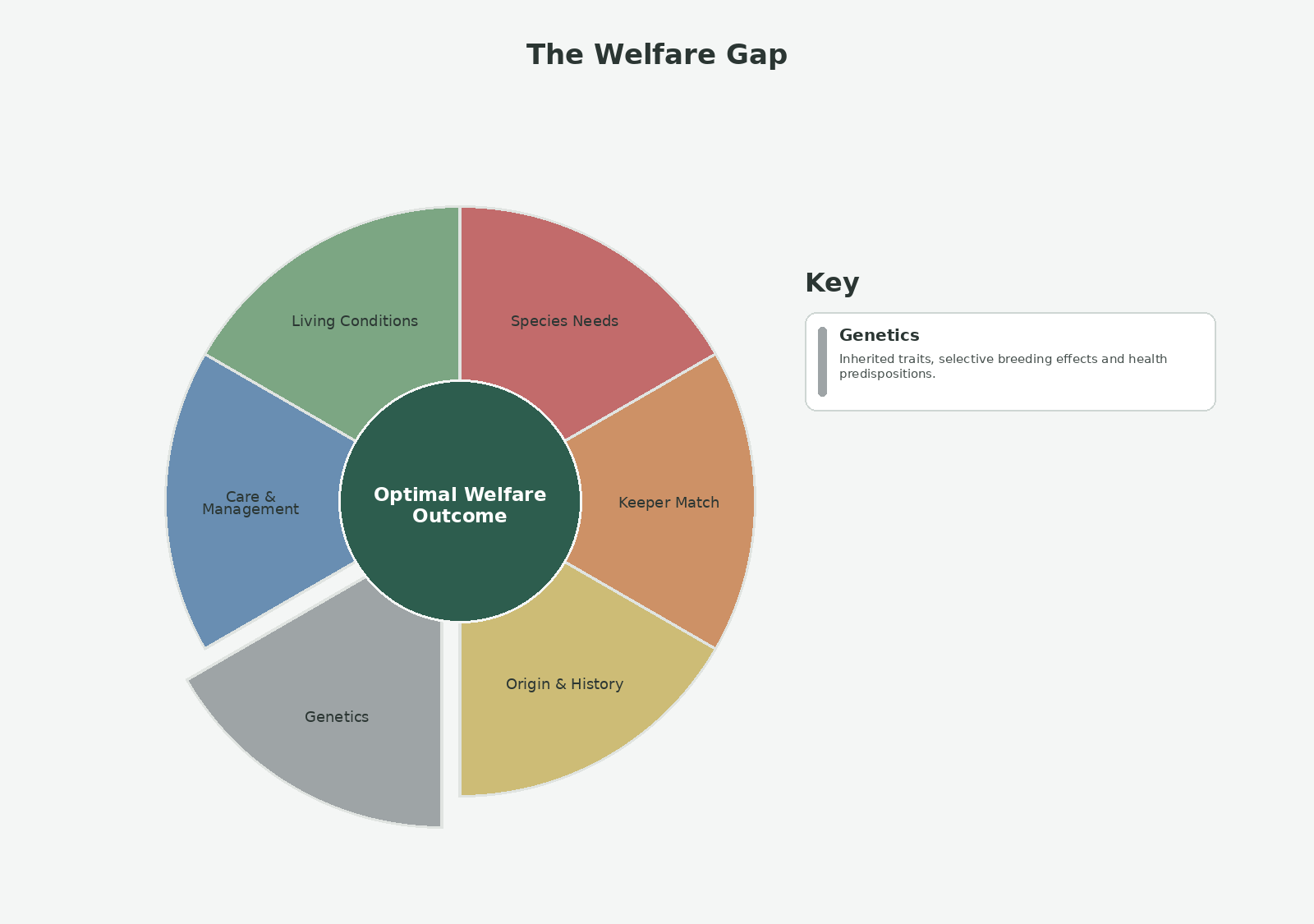
Genetic factors can shape health, behaviour and welfare outcomes long before care and husbandry are considered.
Good welfare can be limited before an animal is even born.
Genetics influence how an animal grows, functions, behaves and responds to its environment throughout life. Selective breeding, inherited health conditions and reduced genetic diversity can all affect welfare outcomes — even where care and husbandry are otherwise good.
Some inherited traits may reduce physical function, increase disease risk or alter normal behaviour. In other cases, limited founder populations and repeated inbreeding can reduce genetic vigour over time.
Understanding genetics within the Welfare Gap framework means considering:
inherited health predispositions,
the effects of selective breeding,
reduced genetic diversity,
behavioural and physiological impacts of inherited traits,
and whether breeding practices prioritise welfare over appearance or novelty.
Genetics does not determine welfare alone, but it can influence how resilient an animal is to challenges throughout life.
A genetically compromised animal may struggle to achieve positive welfare outcomes even when other welfare pillars are well aligned.
Genetics interacts closely with the other welfare pillars.
Exploring the Welfare Pillars
Each pillar influences the welfare outcome of the individual animal and interacts with the others to shape overall welfare.
Understanding these interactions is essential for closing the welfare gap.
Return to From Niche to Need to explore the taxon routes, practical questions and seven interconnected biological perspectives.