
Care & Management
Closing the Welfare Gap
Daily care and long-term management shape welfare outcomes throughout an animal’s life.
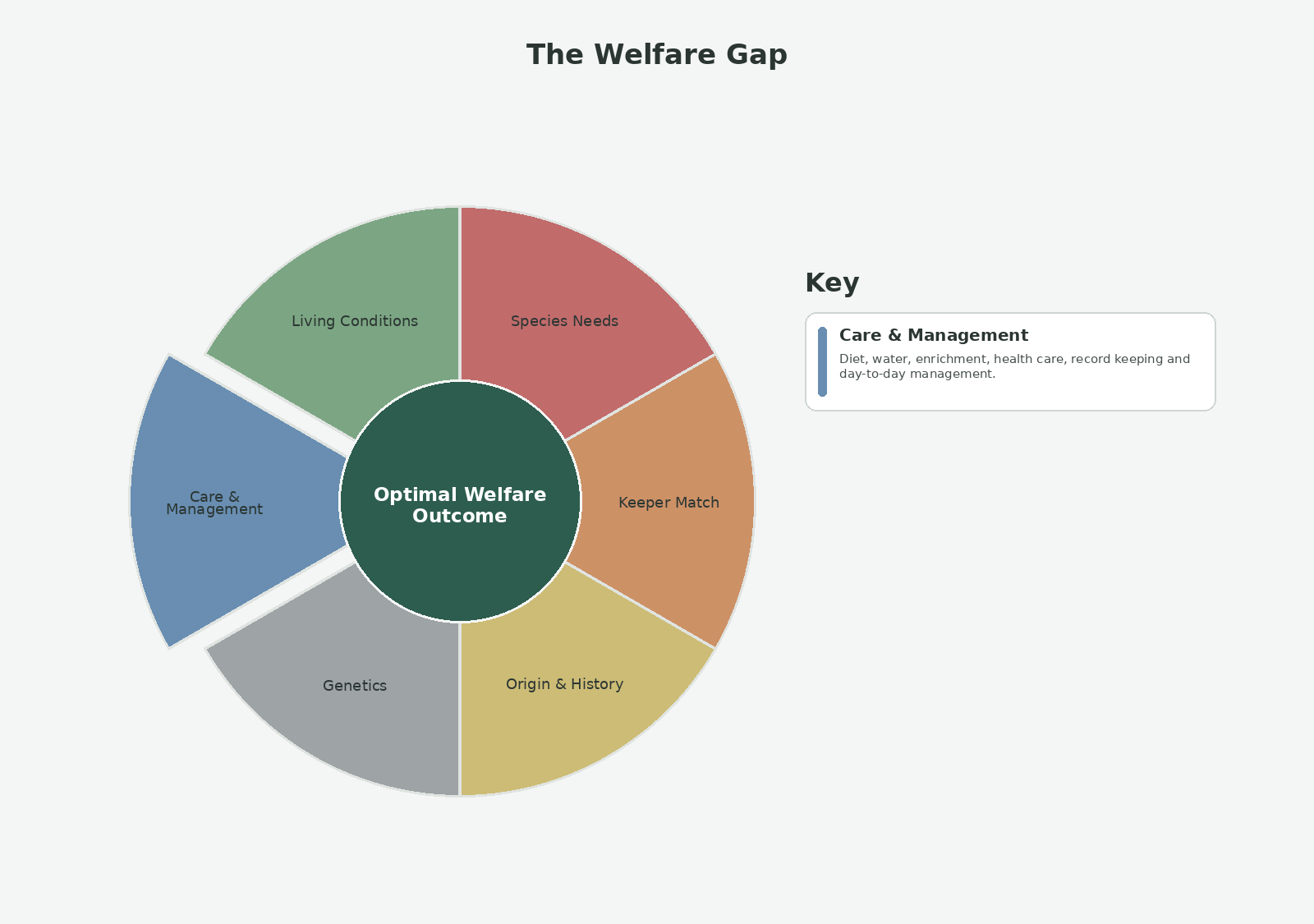
Even where appropriate environments are provided, welfare can decline if day-to-day care is inconsistent, outdated or poorly adapted to the needs of the individual animal.
Care and management influence health, nutrition, behaviour, hygiene and the animal’s ability to cope with changing conditions over time.
Understanding care and management within the Welfare Gap framework means considering:
diet and nutrition,
water provision,
hygiene and enclosure maintenance,
behavioural enrichment,
social structure, grouping and compatibility,
health monitoring and veterinary care,
appropriate handling, interaction and restraint,
breeding management,
seasonal adjustments,
record keeping,
and ongoing review of welfare outcomes.
Good management requires observation to understand the individual animal’s needs and preferences, and adapting both the environment and care provided in response to them with consistency over time.
The needs of animals may change over time due to age, growth, reproductive status, health, social dynamics or seasonal cycles.
Positive welfare therefore depends not only on providing care, but on continually assessing whether that care is actually meeting the needs of the individual animal.
Care & Management interacts closely with the other welfare pillars.
Exploring the Welfare Pillars
Each pillar influences the welfare outcome of the individual animal and interacts with the others to shape overall welfare.
Understanding these interactions is essential for closing the welfare gap.
Return to From Niche to Need to explore the taxon routes, practical questions and seven interconnected biological perspectives.