
Contribute or Get in Touch
To learn more about why we believe collaboration and the sharing of knowledge is so important, please visit the About page.
We aim for Species First® to provide the information that matters most to you - and to the animals in your care.
We welcome input that helps improve the relevance, clarity and impact of this resource.
What would you like to see more of?
Species-specific husbandry guidance for animals commonly kept as pets.
Insights from experienced keepers, scientists and exotic veterinarians
Evidence-based guidance on species suitability for novice keepers
identification of species that struggle to thrive in captivity
Advice on specific welfare or husbandry concerns
What do you like - or find frustrating - about our website?
Your feedback helps improve both this resource and the welfare of the animals it serves.
If you care about improving welfare and evidence-based care, we welcome your perspective - whether you are new to keeping or highly experienced.
Together we can improve outcomes for animals in captivity.
If your enquiry relates to species-specific care and/or your experience with the animal(s) in your care, please include as much detail as possible.
All enquiries are reviewed with a focus on evidence-based welfare and practical applicability.
Responses are informed by current welfare science and practical experience. While we aim to provide evidence-based guidance, we are not able to offer individual veterinary or clinical advice.
If you have concerns about the health or welfare of an animal in your care, we strongly recommend seeking advice from a qualified veterinarian or an experienced, species-appropriate professional.
Species First focuses on developing evidence-based, species-specific guidance to improve welfare outcomes and to help reduce health issues happening in the first place. We are not able to provide individual husbandry advice for specific animals or situations.
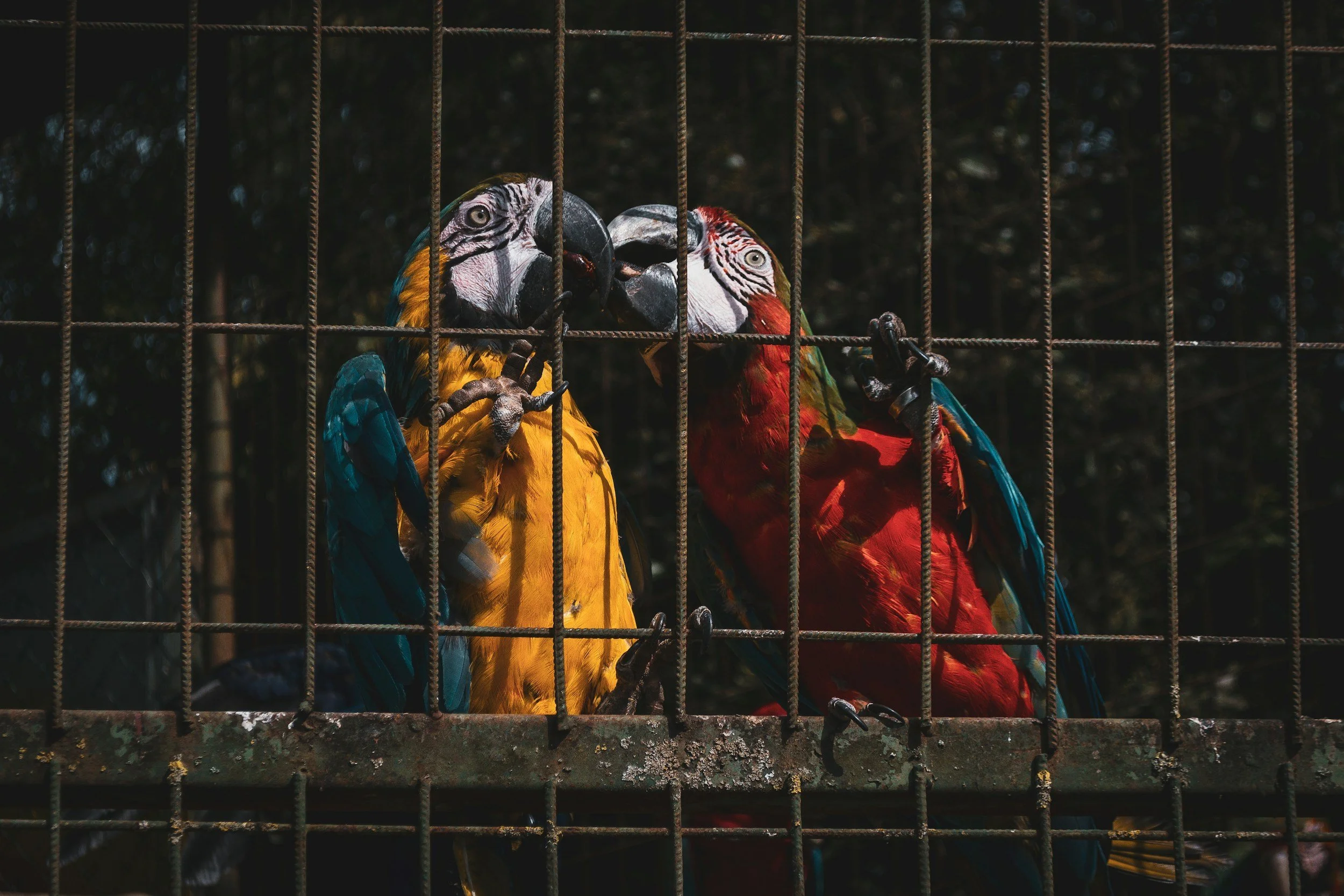
Macaws in a confined cage environment, illustrating welfare challenges associated with keeping large, highly social birds.