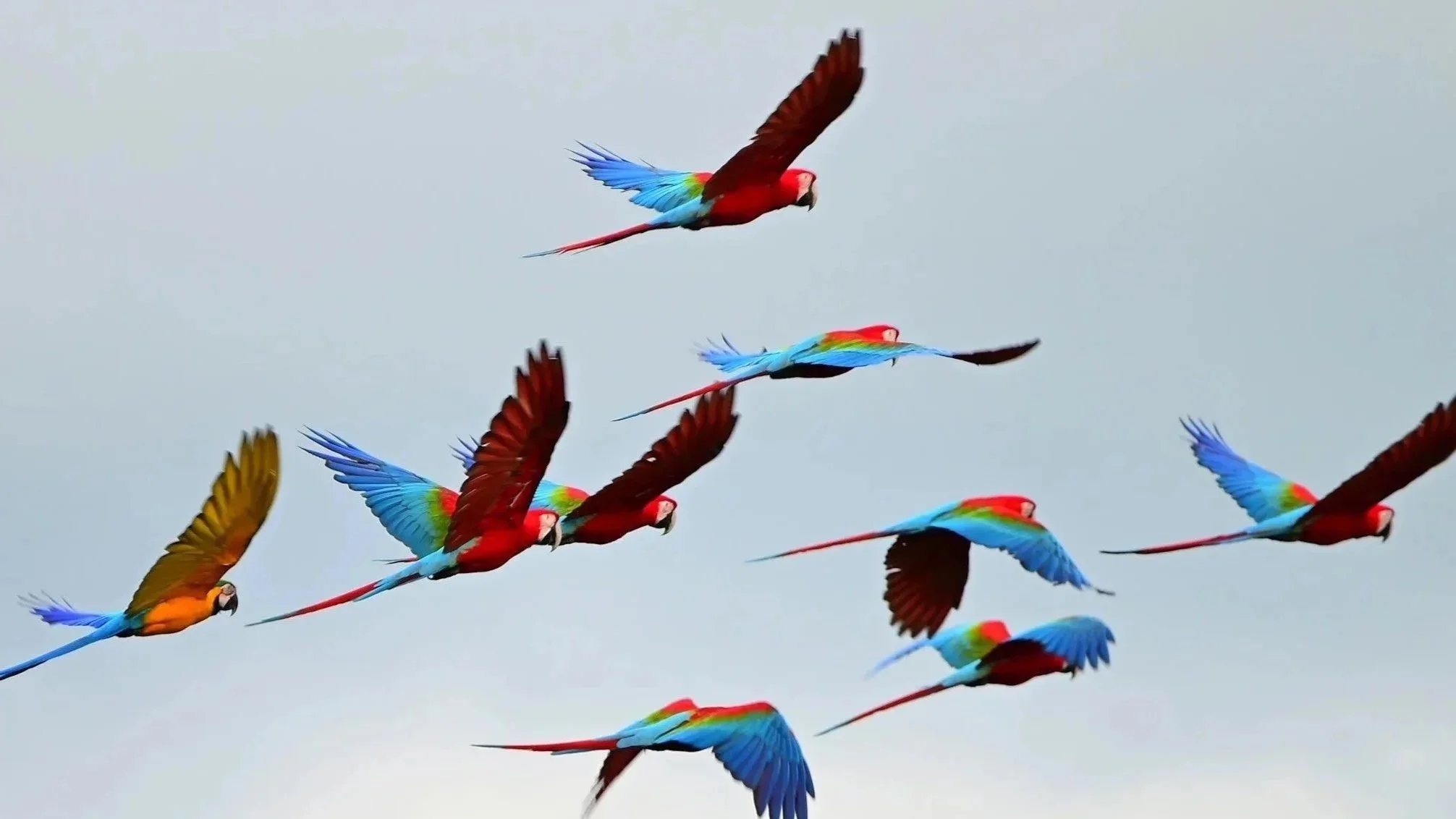
When is an animal no longer wild?
An exploration of the continuum between wildness and domestication, and what this means for animal welfare in captivity.
A Species First® perspective.
Introduction
The question of whether an animal is “wild” or “domesticated” is often framed as a simple distinction. In practice, it is far more complex.
Animals exist along a continuum shaped by evolutionary history, human influence, genetics and behavioural adaptation. Understanding where a species sits along this continuum is essential, not only for classification, but for assessing whether its needs can be met in captivity.
At the centre of this discussion lies a critical distinction that is often overlooked: the difference between domestication and taming.
The biological divide: domestication vs taming
To understand the spectrum of wildness, it is necessary to distinguish between the two primary ways humans interact with non-domestic species: domestication and taming.
Domestication
Domestication is a biological and evolutionary process that occurs over many generations. It involves sustained, selective breeding by humans for traits that make animals more suited to living alongside us¹ ².
Over time, this process leads to permanent genetic changes that differentiate a domesticated species from its wild ancestor³.
The domestic dog (Canis familiaris) is a well-established example. Through thousands of generations of selection, dogs have developed traits that facilitate close association with humans, including reduced fear responses, increased social tolerance and an enhanced ability to interpret human cues⁴.
Domestication does not only affect behaviour. It is associated with a suite of changes across physiology and morphology, often referred to as the domestication syndrome⁵. These can include:
reduced brain size
changes in coat colour and pattern
altered reproductive cycles
diminished flight response
Importantly, modern breeding practices do not necessarily replicate this process. Selection for aesthetic traits-such as colour morphs-does not equate to selection for traits that improve an animal’s ability to thrive in captivity. As such, these practices do not move a species meaningfully along the path toward domestication. Selection for certain phenotypes (external appearance) can also result in the appearance of deleterious traits, such as neurological disorders, metabolic dysfunction, skin issues, as well as reduced fecundity and lifespans due to inbreeding depression.
Taming
Taming, by contrast, is a behavioural process applied to an individual animal⁶.
Through repeated interaction, an animal may become habituated to human presence and tolerate handling. However, this change is not genetic and does not alter the animal’s underlying biology or behavioural needs.
A tamed lion remains a lion. A tamed parrot retains the full complexity of its cognitive, social and environmental requirements.
Crucially, taming is not inherited. The offspring of a tamed animal must be tamed anew, as each individual retains the same underlying biological framework as its wild counterparts⁶.
This distinction is central: the vast majority of exotic animals kept as pets are tamed, not domesticated.
The ability to handle an animal does not equate to biological adaptation to captivity.
Understanding the continuum
This continuum reflects the different ways humans influence operates, from ecological management through to individual taming and, at its extremes, genetic domestication. Rather than a binary distinction, animals exist along a continuum between wild and domestication.
The continuum from wild to domesticated
Wildness is not a fixed state, but a spectrum shaped by biology, environment and human influence.
1. Free-ranging wild animals
Living independently in natural environments, expressing behaviours shaped by ecological pressures.
Welfare: determined primarily by environmental conditions rather than human care.
2. Managed wild populations
Free-ranging but subject to human intervention, such as habitat management, supplementary feeding or confinement within reserves.
Welfare: may benefit from reduced pressures but can involve constraints and unintended consequences.
3. Captive wild animals
Wild species kept in controlled environments, including zoos, collections and private ownership.
Welfare: restricted behavioural opportunities and challenges in replicating natural conditions.
4. Captive-bred wild animals
Bred in captivity over generations, but without selective breeding for domestication.
Welfare: often assumed to be better adapted, yet retain complex needs that may be difficult to meet.
5. Domesticated animals
Species shaped through long-term selective breeding, resulting in genetic and behavioural adaptation to living alongside humans.
Welfare: generally more compatible with human environments, though still dependent on appropriate care.
Most exotic animals kept as pets fall within categories 3 and 4, rather than being truly domesticated.
Free-ranging wild animals
At one end are animals that remain evolutionarily adapted to life in the wild. Their needs are shaped by ecological pressures, including complex foraging behaviours, predator avoidance, social structures and environmental variability⁷.
Even under high standards of care, captive environments cannot fully replicate the ecological and behavioural complexity of the wild. This mismatch between evolved needs and captive conditions is widely recognised as a key driver of compromised welfare, particularly in wide-ranging, cognitively complex or socially specialised species⁸ ¹¹.
These mismatches may manifest as:
chronic stress
behavioural abnormalities
reduced ability to express natural behaviours
Captive-bred wild animals
Many species are bred in captivity across multiple generations. This is often assumed to reduce their wildness, yet empirical evidence suggests that captive breeding alone does not fundamentally alter species-typical behavioural and physiological needs and therefore does not equate to domestication³ ⁹.
Without sustained selection for traits that favour life alongside humans, these animals remain fundamentally similar to their wild ancestors. Their needs - environmental, behavioural and social - persist, and are complex to meet within the constraints of typical captive settings¹¹.
Some individuals may become habituated to humans, particularly when handled from a young age. These animals may appear calm or manageable. However, such taming reflects tolerance, not adaptation.
The animal retains the same behavioural and physiological needs as its wild counterparts. The ability to handle an animal should not be interpreted as evidence that it is thriving.
Domesticated species
At the other end of the continuum are domesticated species.
Through long-term selective breeding, these animals have undergone genetic and behavioural changes that make them more compatible with human environments, but may still have problems because the process of domestication doesn’t completely protect them.
Dogs are therefore not simply “tamed wolves”, but the result of sustained , multi-generational selection for traits that facilitate coexistence with humans. They represent a distinct evolutionary pathway shaped by human selection over thousands of years⁴.
This distinction is critical when considering welfare expectations in captivity.
Welfare Implications
Confusion between taming, captive breeding and domestication can lead to significant misunderstandings about animal welfare.
An animal that:
appears calm
is hand-reared
or is several generations removed from the wild
may still have complex needs that are difficult to meet in captivity⁸ ¹⁰.
Veterinary and welfare-focused assessments increasingly emphasise that suitability for captivity should be based not on manageability, but on whether an animal’s behavioural, physiological and psychological needs can be reliably met over its lifetime¹².
The ability to handle an animal does not equate to suitability for captivity.
Conclusion
The question of when an animal is no longer wild does not have a simple answer.
Rather than a clear boundary, there is a spectrum shaped by biology, behaviour and human influence. Within this spectrum, domestication represents a profound evolutionary transformation, while taming and captive breeding reflect more limited and often misunderstood changes.
Recognising these distinctions allows for a more informed and evidence-based understanding of animal welfare - one that places the biological and behavioural needs of the species, rather than human preference or convenience, at the centre of decision-making.
References
Zeder, M. A. (2012). The domestication of animals. Journal of Anthropological Research. 68(2), 161-190
Larson, G., & Fuller, D. Q. (2014). The evolution of animal domestication. Annual Review of Ecology, Evolution, and Systematics. 45, 115-136
Price, E. O. (2002). Animal Domestication and Behavior. Wallingford:CABI Publishing.
Hare, B., & Tomasello, M. (2005). Human-like social skills in dogs. Trends in Cognitive Sciences. 9 (9), 439-444
Wilkins, A. S., Wrangham, R. W., & Fitch, W. T. (2014). The “domestication syndrome” in mammals: Unified explanation based on neural crest cell behaviour and genetics. Genetics, 197 (3), 795-808
Hemsworth, P. H., & Coleman, G. J. (2011). Human-Livestock Interactions: The Stockperson and the Productivity and Welfare on Intensively Farmed Animals (2nd ed.). Wallingford: CABI Publishing
Fraser, D. (2023). Understanding animal welfare: The Science in its Cultural Context. Universities Federation for Animal Welfare: Wiley Blackwell
Mason, G. J. (2010). Species differences in responses to captivity: Stress, welfare and the comparative method. Trends in Ecology & Evolution, 25 (12), 713-721
Clubb, R., & Mason, G. J. (2007). Natural behavioural biology as a risk factor in carnivore welfare: How analysing species differences could help zoos improve enclosures. Animal Welfare, 16 (Suppl.), 1-7
Warwick, C. et al. (2018). Exotic pet suitability: Understanding some problems and using a labelling system to aid animal welfare, environment and consumer protection. Journal of Veterinary Behaviour, 26, 17-26.
Schuppli, C.A., Fraser, D., & Bacon, H.J. (2014). Welfare of non-traditional pets. Rev. Sci. Tech, 33 (1), 221-231
British Veterinary Association (BVA). (2023, February 16). Think twice before buying “exotic” pets: Eight in ten vets concerned about the welfare of reptiles, birds and other non-traditional pets. Available at: https://www.bva.co.uk/news-and-blog/news-article/think-twice-before-buying-exotic-pets-eight-in-ten-vets-concerned-about-the-welfare-of-reptiles-birds-and-other-non-traditional-pets/ (Accessed: April 2026)
Coming soon:
At Species First, we are building a growing library of evidence-based guidance to improve the welfare of exotic animals in captivity.
Forthcoming perspectives include:
What is a pet? How perception shapes the animals we keep.
How exotic animal keeping is changing: trends across the UK, EU and US.
Convention on International Trade in Endangered Species (CITES) and animal welfare: what it does - and what it doesn’t do.
Why some species struggle to thrive in captivity - even with good care.
Follow Species First for updates as new Perspectives are published.